



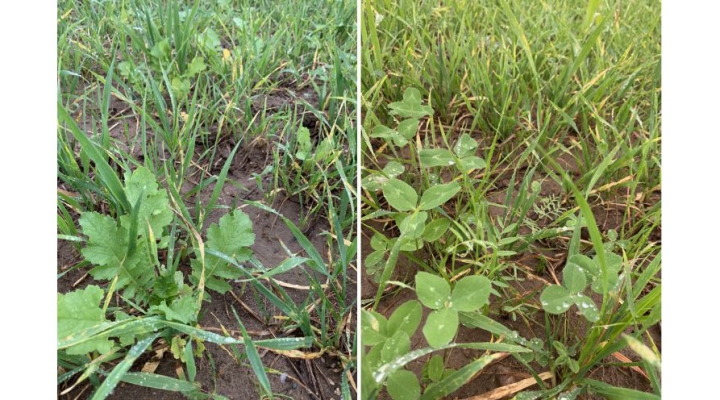
MASON, Mich. — Want to see firsthand what all the cover crop hype is about? For the first time, the cover crop demonstration plots at the Michigan State University Mason Research Farm are open daily to the public Oct. 1–31, sun up to sun down. Visitors can take a self-guided tour through plots that feature both “tried and true” and emerging cover crop recipes, all planted following wheat. Educational plot signs guide visitors through the various cover crop recipes, presenting the seeding rate, method and time as well as estimated seed cost per acre.
Some highlights:
- Single species plots planted at the low and high ends of suggested seeding rate range.
- 2-, 4- and 6-way mixes that are designed for nitrogen fixation, biomass production, forage quality, or designed to give you a headache come spring.
- Recently planted plots comparing establishment following different planting methods (broadcast versus drill).
The demonstration plots are located at the MSU Mason Research Farm, 1614 Okemos Rd, Mason, MI 48854. Head south on Okemos Road and take the first left at Lamb Road. Follow field signs and turn left at the culvert off Lamb Road.

Across Michigan farms, cover crops continue to become more common. When managed correctly, they can provide a variety of benefits to farmland and to the surrounding communities. Cover crops help farmers across the state build soil organic matter, prevent erosion driven soil and nutrient loss, and even create supplemental grazing opportunities.
Choosing a cover crop species or mix that will help you achieve your goals and then making a plan for planting and termination can be complicated. If you are considering planting cover crops this fall, check out some of the resources below or contact your local Michigan State University Extension educator.
Cover crop resources
- MSU Extension Cover Crops page has some great research-based resources.
- MSU Extension publication on Cover Crop Termination walks you through termination options for a variety of cover crops.
- Midwest Cover Crop Council’s Cover Crop Decision Tool can help choose which species would work best in your rotation based on your goals. The tool has suggested planting dates that vary by county as well as seeding rates for a variety of cover crops used in Michigan.
If you have any questions about the demonstration plots, reach out to Madelyn Celovsky, [email protected] or Monica Jean, [email protected].
— Madelyn Celovsky and Monica Jean, Michigan State University Extension

